For many households in Pakistan, preparing for Ramzan has become increasingly challenging. The prices of everyday food items—flour, cooking oil, sugar, and pulses—continue to rise, putting significant pressure on families already struggling with limited income. For daily wage workers and unemployed individuals, even basic grocery shopping during Ramzan can become difficult.
To address this growing concern, the Government of Pakistan introduced the PM Ramzan 13000 Payment Scheme 2026, a financial support initiative aimed at helping vulnerable households manage essential expenses during the holy month. Through this program, eligible families receive Rs.13,000 in direct financial assistance, allowing them to purchase food and household necessities without taking loans or relying on informal borrowing.
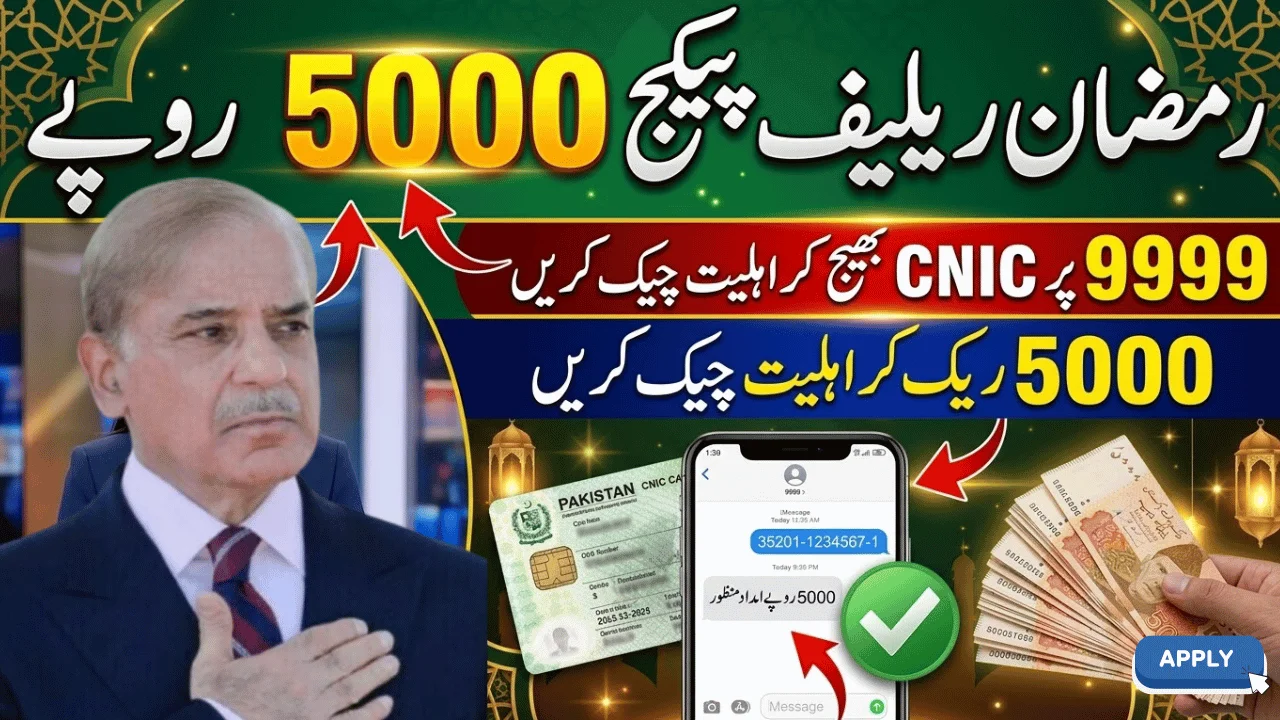
What makes the 2026 scheme more efficient is its digital verification system, which allows citizens to check eligibility from home using the 9999 SMS service. Instead of visiting government offices and standing in long lines, applicants can verify their status quickly through their mobile phones.
This detailed guide explains how the scheme works, who qualifies, how to check eligibility using SMS, how payments are distributed, and practical tips to avoid delays.
Understanding the PM Ramzan 13000 Payment Scheme
The PM Ramzan Relief initiative is designed as a short-term financial safety net before or during Ramzan. Its primary objective is to ensure that economically vulnerable families can afford basic food supplies.
Unlike earlier subsidy programs that relied heavily on physical distribution systems, the 2026 model focuses on direct cash assistance. This approach allows families to decide how best to spend the money according to their household needs.
For example:
-
A family with young children may prioritize buying milk and flour.
-
A widow running a small household may spend the amount on cooking oil and rice.
-
Daily wage workers may use part of the funds to cover temporary unemployment during Ramzan.
By transferring money directly to eligible beneficiaries, the government reduces middlemen involvement and increases transparency.
Key Details of the PM Ramzan Relief Program
| Program Feature | Details |
|---|---|
| Program Name | PM Ramzan Relief Package 2026 |
| Assistance Amount | Rs. 13,000 |
| Verification Method | SMS to 9999 or online portal |
| Coverage | All provinces of Pakistan |
| Target Group | Low-income households |
| Payment Type | Non-refundable government grant |
| Distribution Partners | Government banks & payment centers |
The scheme operates nationwide, meaning families in both urban and rural districts can benefit.
Why the Government Introduced the 9999 SMS System
One major challenge in welfare programs is accessibility. Many citizens, especially in rural areas, do not have reliable internet access or digital literacy.
To solve this problem, the government launched the 9999 SMS verification system. It enables citizens to check eligibility using any mobile phone without visiting offices.
This system offers several advantages:
-
Quick eligibility confirmation
-
No internet connection required
-
Reduced crowding at government offices
-
Faster processing of applications
In practical terms, someone living in a remote village can check their eligibility in seconds without traveling long distances.
How to Check Eligibility Through 9999 SMS
Checking your eligibility is a simple process that takes less than one minute.
Step-by-Step Process
-
Open the messaging application on your mobile phone.
-
Type your 13-digit CNIC number.
-
Ensure there are no spaces or dashes in the number.
-
Send the message to 9999.
-
Wait for a confirmation SMS showing your eligibility result.
Most users receive a response within a few minutes, although delays can occur during peak hours.
Who Is Eligible for the Rs.13,000 Assistance?
The government uses multiple databases to identify households that genuinely require financial assistance.
Eligibility is primarily determined through socioeconomic data collected by national welfare surveys.
Households Likely to Qualify
The program mainly targets families that fall into these categories:
-
Daily wage laborers
-
Unemployed individuals
-
Widows or single parents
-
Persons with disabilities
-
Families registered in the national socioeconomic registry
These groups are often the most affected by rising food prices.
Key Eligibility Conditions
While the exact criteria may vary slightly, most eligible households meet these general conditions:
1. Low Household Income
Families with limited monthly income are prioritized. The scheme focuses on households struggling to meet basic living expenses.
2. Valid CNIC
Applicants must have a valid Pakistani identity card issued by the national registration authority.
3. Updated Household Data
Eligibility depends on socioeconomic data recorded in government databases. Updated survey information improves verification speed.
4. Registered Mobile SIM
The SIM card used for verification should ideally be registered under the same CNIC.
Who Is Usually Not Eligible?
To ensure fairness, the system automatically excludes individuals who do not meet financial eligibility standards.
Common disqualification factors include:
-
High-income taxpayers
-
Senior government employees
-
Owners of luxury vehicles or large properties
-
Individuals with strong financial records
These checks are performed automatically using integrated government databases.
Why SMS Replies Sometimes Take Time
Many applicants worry when they do not receive an immediate reply after sending their CNIC to 9999.
In most cases, delays are caused by technical or system-related factors.
Common Reasons
High System Traffic
During peak hours, millions of people send messages simultaneously, causing temporary processing delays.
Outdated Survey Information
If household data has not been updated recently, the system may require additional verification.
SIM Registration Issues
If the SIM card is not registered under the same CNIC, the system may flag the request.
Usually, responses arrive once the system completes verification.
How to Collect the Rs.13,000 Payment
Once your eligibility is confirmed, you will receive instructions about where to collect your payment.
Distribution is handled through authorized financial institutions and designated relief centers.
Payment Collection Locations
Beneficiaries may receive payments from:
-
Government partner bank branches
-
Special Ramzan relief camps
-
Biometric retail agents
-
Selected financial service providers
Documents Required
When visiting a payment center, you must bring:
-
Original CNIC
-
Registered mobile number
-
Biometric thumb verification
Biometric verification ensures that payments reach the correct recipient.
Practical Tips to Avoid Problems
Many applicants face delays due to small mistakes during verification.
Following these simple tips can improve the process.
-
Always send your CNIC without spaces or dashes
-
Use a SIM card registered under your own CNIC
-
Avoid sending repeated messages from multiple numbers
-
Ensure your CNIC is not expired
These steps help the system verify your identity faster.
Advantages and Limitations of the Scheme
Benefits
-
Provides immediate financial relief during Ramzan
-
Digital verification reduces corruption
-
Accessible through simple SMS service
-
Nationwide coverage for rural and urban areas
Possible Limitations
-
Eligibility depends on existing government data
-
Some households may have outdated survey records
-
SMS response times may vary during peak periods
Despite these limitations, the scheme remains one of the most accessible relief initiatives in recent years.
2026 Insights: Shift Toward Digital Welfare Systems
The PM Ramzan 13000 Payment Scheme 2026 reflects a broader shift toward digital welfare distribution in Pakistan.
Government agencies are increasingly integrating national databases to create more accurate and transparent assistance systems.
Experts believe that future welfare programs will likely include:
-
Digital wallets for payments
-
Faster biometric verification systems
-
Real-time eligibility tracking
-
Integrated mobile applications for welfare programs
These changes aim to improve efficiency while ensuring that assistance reaches deserving households quickly.
Frequently Asked Questions
Is the Rs.13,000 assistance a loan?
No. The payment is a non-refundable government grant, meaning beneficiaries do not have to repay it.
How long does it take to receive an SMS reply?
Most users receive a reply within minutes, but during busy hours it may take longer.
Can women apply for the scheme?
Yes. Women who are heads of households are often prioritized in welfare programs.
Is there any fee for checking eligibility?
No. Checking eligibility through 9999 SMS is free, except for standard network SMS charges.
Can I apply if I am already receiving welfare assistance?
Many households already receiving social support may still qualify, depending on their eligibility status.
Final Thoughts
The PM Ramzan 13000 Payment Scheme 2026 represents a significant effort to support families facing financial hardship during the holy month. By combining digital verification systems with direct cash assistance, the government aims to ensure that help reaches those who need it most.
For households struggling with rising food prices, this Rs.13,000 relief payment can provide meaningful support for purchasing essential groceries and maintaining household stability during Ramzan.
If you believe your family qualifies, sending your CNIC number to 9999 is the quickest way to verify your eligibility and stay informed about payment updates.