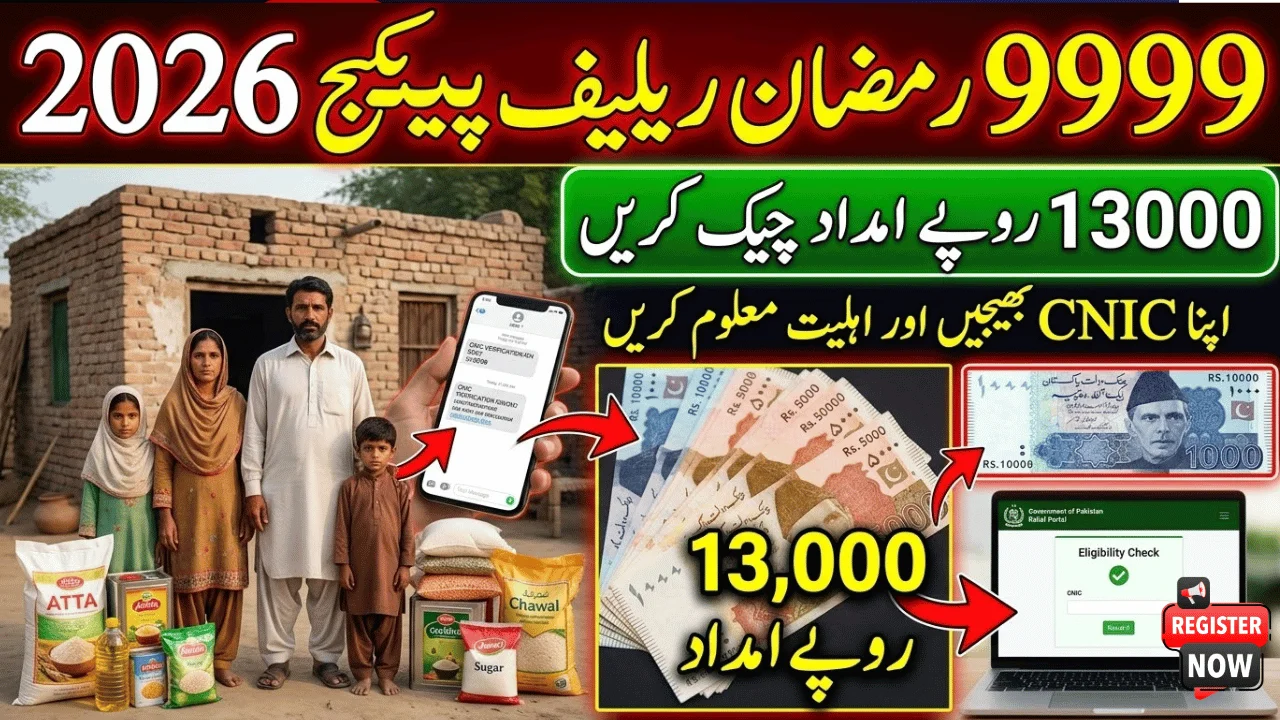
As Ramadan 2026 draws closer, many families are asking the same urgent question: Is my name included in the 9999 PM Ramzan Package Rs 13,000 list?
With grocery prices still unstable and household expenses increasing during Ramadan, this relief amount can make a meaningful difference. But confusion about eligibility, SMS codes, and online portals often leaves people uncertain.
This complete, practical CNIC guide explains how to check your name in the 9999 PM Ramzan Package 2026 safely, what eligibility actually means, and what to do if your status shows “not eligible.”
What Is the 9999 PM Ramzan Package 2026?
The 9999 PM Ramzan Package 2026 is a federal relief initiative introduced to support low-income households during Ramadan. Under this scheme, eligible families receive Rs 13,000 in financial assistance.
The program operates through digital verification systems managed by:
-
Government of Pakistan
-
Benazir Income Support Programme
-
National Database and Registration Authority
The objective is to ensure that assistance reaches deserving households without paperwork delays or middlemen interference.
How to Check Your Name via SMS (9999 Method)
For many families, especially in rural areas, SMS remains the easiest way.
Step-by-Step Process:
-
Open your mobile message app
-
Type your 13-digit CNIC (without dashes)
-
Send it to 9999
-
Wait for an official reply
You will receive one of these responses:
-
Eligible
-
Under Verification
-
Not Eligible
Important 2026 Update
This year, the system also checks:
-
SIM ownership (must be registered under your CNIC)
-
Valid CNIC status
-
Poverty database records
If your SIM is not registered in your name, your request may fail.
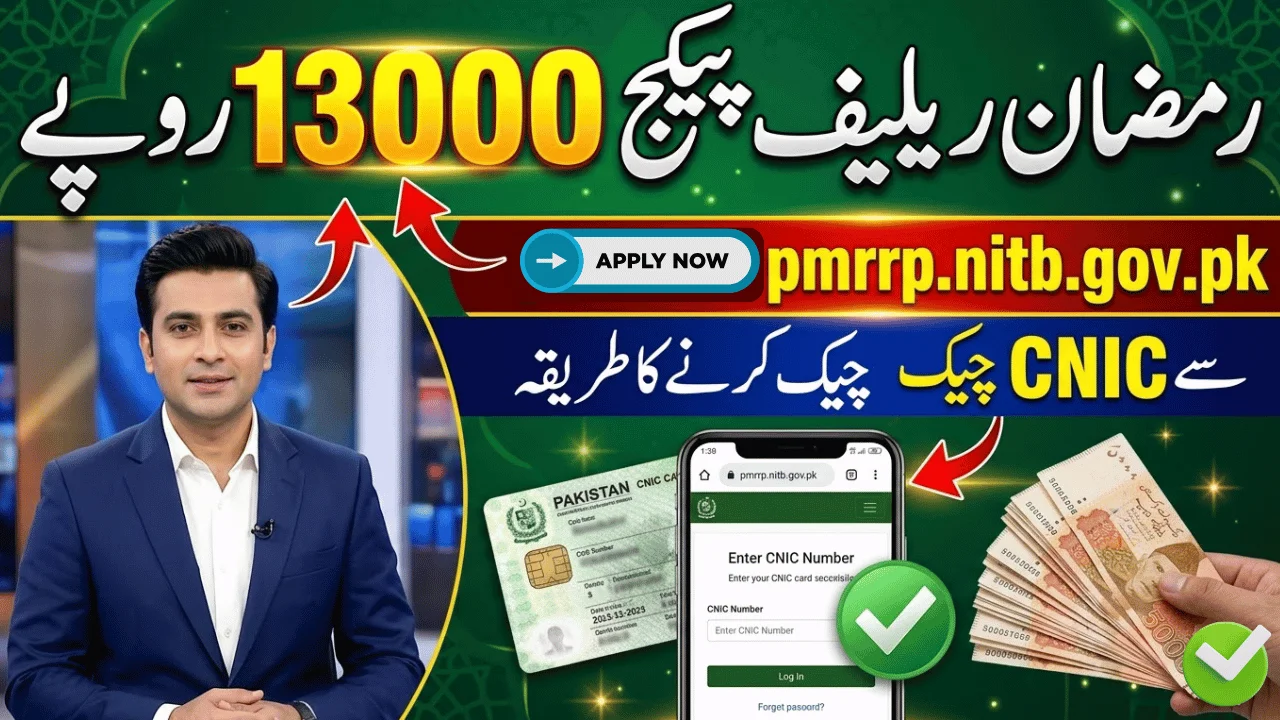
How to Check Online Through pmrrp.nitb.gov.pk
If you prefer online verification, you can use the pmrrp.
Visit:
pmrrp.com
Online Steps:
-
Enter your 13-digit CNIC
-
Complete captcha verification
-
Click “Check Eligibility”
The portal displays your result instantly in most cases.
This system is directly linked with national databases, which reduces fraud and speeds up screening.
Who Qualifies for Rs 13,000 Relief?
Eligibility is based on your Proxy Means Test (PMT) score, which reflects your household’s economic condition.
Likely Eligible Groups
-
Registered BISP beneficiaries
-
Families earning below defined income thresholds
-
Widows and female-headed households
-
Persons with disabilities
-
Daily wage earners
-
Households without major assets
Usually Not Eligible
-
Government employees in higher grades
-
High-income taxpayers
-
Individuals owning registered vehicles (except motorbikes in many cases)
-
Owners of large properties
The screening is automated and data-driven.
Why Some Names Do Not Appear in the 9999 List
Many applicants assume rejection means permanent exclusion. That’s not always true.
Common reasons include:
-
Incorrect CNIC entry
-
Expired CNIC
-
Outdated family registration details
-
Income records above threshold
-
SIM mismatch
-
Recent survey data not yet updated
What You Can Do
-
Update your family information with NADRA
-
Ensure SIM is registered in your name
-
Recheck after 48–72 hours
-
Complete NSER survey if not registered
Cash Transfer vs Subsidized Items – What’s the Difference?
While most eligible families receive direct cash, some assistance may be provided through subsidized food channels.
| Support Type | Details |
|---|---|
| Cash Transfer | Rs 13,000 direct payment |
| Utility Store Subsidy | Discounted essential items |
| Distribution Method | Bank transfer / authorized centers |
The exact method depends on your verification profile.
Real-Life Example
Imagine a family in Peshawar with a monthly income of Rs 32,000. Ramadan increases their grocery spending by nearly 30%.
If their name appears in the 9999 PM Ramzan Package list:
-
Rs 13,000 covers flour, oil, rice, and sugar
-
They avoid borrowing from relatives
-
Household financial stress decreases
That’s why early verification matters.
Why You Should Check Early
Many people wait until Ramadan begins. That leads to:
-
Long queues
-
Overloaded systems
-
Delayed corrections
Checking your name early allows you to fix any data issues before payments start.
Pros and Cons of the 9999 Verification System
| Pros | Cons |
|---|---|
| Quick SMS confirmation | Heavy traffic may delay responses |
| Digital transparency | Strict eligibility screening |
| No physical forms | Database errors possible |
| Nationwide coverage | Requires accurate CNIC data |
Safety Tips – Protect Yourself From Scams
Every year, fake messages circulate during Ramadan relief programs.
Protect yourself:
-
Registration is free
-
Government never charges a fee
-
Only trust 9999 or 8171 codes
-
Never share OTP or banking PIN
-
Avoid clicking suspicious links
If someone asks for money, it is fraud.
FAQs – Check Your Name in 9999 PM Ramzan Package
1. How do I confirm if my name is included?
Send your CNIC to 9999 or check via the 8171 portal.
2. Is there any fee for checking eligibility?
No. It is completely free.
3. What does “Under Verification” mean?
Your data is being cross-checked. Recheck after 2–3 days.
4. Can I apply again if rejected?
Yes, after correcting your records.
5. When will Rs 13,000 payments begin?
Payments are expected before Ramadan 2026 once verification is complete.
6. Can someone else check for me?
Yes, but your SIM must be registered in your name for SMS verification.
Final Takeaway
If you want to check your name in the 9999 PM Ramzan Package Rs 13,000 list 2026, act early and verify through official channels only.
Make sure:
-
Your CNIC is valid
-
Your SIM is registered in your name
-
Your household data is updated
The digital verification system is designed to ensure transparency and fairness. While not everyone qualifies, those who meet the criteria can receive meaningful support during Ramadan.
Check carefully, stay alert, and rely only on official information.