For many families in Punjab, Ramadan is not only a time for spiritual reflection but also a period when household expenses increase. Grocery costs rise, electricity usage grows due to longer nights, and families try to prepare better meals for iftar and sehri.
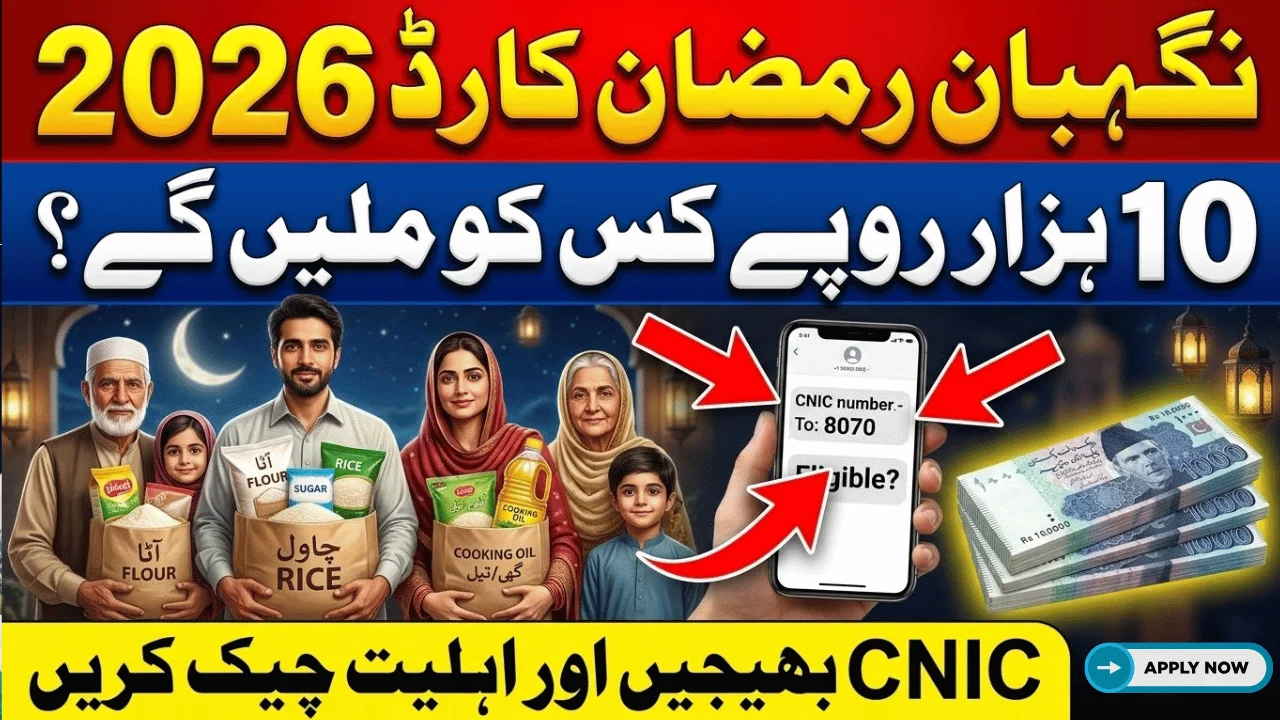
To help reduce financial pressure, the Punjab government launched the Nigehban Ramadan Card 2026, a relief initiative that provides Rs.10,000 in financial assistance to eligible low-income households. However, many people expected the payment but did not receive it during the initial distribution.
If you are among those wondering why the payment hasn’t arrived yet, the situation may not necessarily mean you are ineligible. In many cases, payments are processed in phases, and verification of household data can delay approval.
This guide explains how the Nigehban Ramadan Card program works, how to check your eligibility, and what steps you can take if you have not received the Rs.10,000 aid yet.
What Is the Nigehban Ramadan Card Program?
The Nigehban Ramadan Card is a provincial welfare initiative designed to support financially vulnerable families during Ramadan.
Instead of distributing food packages alone, the program offers direct financial assistance, allowing households to decide how to spend the money according to their needs.
Main Goals of the Program
The initiative aims to:
-
Help families manage increased Ramadan expenses
-
Provide quick financial relief to low-income households
-
Ensure transparent distribution through CNIC verification
-
Support citizens affected by inflation
By using a digital verification system, authorities can identify deserving families more accurately.
Why Some Families Did Not Receive the Rs.10,000 Payment
If you expected the assistance but did not receive it yet, there could be several possible reasons.
Common Causes for Payment Delay
1. Verification Still in Progress
Government databases sometimes require time to verify household information before releasing payments.
2. Phased Payment Distribution
Relief funds are often distributed in multiple phases to avoid overcrowding at payment centers.
3. Incomplete or Outdated Records
If your personal information or household data is outdated, the system may temporarily delay approval.
4. Database Matching Issues
Eligibility checks rely on national welfare databases, which may require updates for some applicants.
In many cases, families receive payments in later phases once verification is completed.
How to Check Nigehban Ramadan Card Eligibility
The most important step is confirming whether your CNIC is eligible for the program.
Verify Eligibility Through SMS 8070
Punjab residents can check their status using the official 8070 SMS verification system.
Step-by-Step Process
-
Open the messaging app on your mobile phone.
-
Type your 13-digit CNIC number without spaces or dashes.
-
Send the message to 8070.
-
Wait for the reply confirming your eligibility status.
The SMS response will tell you whether you qualify for the program or if your application is still under review.
Understanding Different Government Verification Codes
Many people become confused because different relief programs use different SMS codes.
Here is a simple comparison.
| SMS Code | Program |
|---|---|
| 8070 | Punjab Nigehban Ramadan Package |
| 8171 | Benazir Income Support Programme (BISP) |
| 9999 | Federal relief programs |
Using the correct code is important to check your eligibility for the specific program.
Who Is Eligible for the Rs.10,000 Nigehban Assistance?
The program mainly targets households facing financial difficulties.
Typical Eligible Groups
You may qualify if:
-
Your family income falls below the poverty threshold
-
Your household is registered in welfare databases
-
You are a daily wage worker or laborer
-
You belong to a vulnerable group such as widows or disabled individuals
Eligibility is confirmed through CNIC verification and socio-economic data.
What To Do If Your Status Shows “Under Verification”
If the system indicates that your application is still under review, it is important not to panic.
Practical Steps to Take
-
Wait for the next payment phase announcement
-
Keep your registered mobile number active
-
Ensure your CNIC is valid and not expired
-
Update your household data if required
Verification processes sometimes take longer when large numbers of applications are submitted.
Real-Life Example: Why Verification Matters
Imagine a household where the head of the family works as a daily wage laborer. The government database might initially show outdated information about income or family members.
Until the data is updated and verified, the system may delay the payment approval. Once records are corrected, the family can receive assistance in the next distribution phase.
This verification process helps ensure that relief funds reach the right households.
Advantages and Limitations of the Nigehban Program
Benefits
✔ Direct financial assistance for families
✔ Simple CNIC-based verification process
✔ Reduced corruption through digital systems
✔ Helps households manage Ramadan expenses
Possible Limitations
⚠ Some deserving families may not appear in the database
⚠ Verification delays due to high demand
⚠ Limited awareness in rural areas
Despite these challenges, the program provides meaningful relief for many households.
Safety Tips to Avoid Fraud
Relief programs often attract scammers who try to exploit vulnerable citizens.
Important Safety Guidelines
-
Use only official SMS codes such as 8070
-
Avoid clicking suspicious links sent via WhatsApp or social media
-
Never pay anyone claiming to “add your name” to the program
-
Do not share CNIC details with unknown callers
Government assistance programs are free of charge.
2026 Insight: Expansion of Digital Welfare Systems
Pakistan is increasingly shifting toward digital welfare distribution systems.
Recent improvements include:
-
CNIC-based eligibility verification
-
SMS notification services
-
Biometric authentication at payment centers
-
Online welfare portals
These technologies help ensure that assistance reaches deserving families faster and more transparently.
Frequently Asked Questions (FAQs)
What is the Nigehban Ramadan Card 2026?
It is a Punjab government relief program providing Rs.10,000 financial assistance to eligible low-income families during Ramadan.
How can I check my eligibility?
Send your 13-digit CNIC number to 8070 via SMS to verify your status.
Why did I not receive the payment yet?
Payments may be distributed in phases, or your data may still be under verification.
Is the program free?
Yes. There is no registration fee for the Nigehban Ramadan Package.
What should I do if my CNIC shows “Not Eligible”?
Ensure your personal and household records are updated in government databases.
Conclusion
The Nigehban Ramadan Card 2026 is an important initiative aimed at supporting families facing financial hardship during Ramadan. If you expected the Rs.10,000 assistance but have not received it yet, the most important step is to verify your CNIC through the official 8070 SMS system.
In many cases, delays occur because payments are released in phases or because household data is still being verified. Staying updated through official channels and ensuring your information is accurate can help ensure that you receive the support you are entitled to.